How Gaming Software Updates Influence Rule Adaptations in Live Dealer Games Featuring Integrated Bonuses
Nils Klein · Sep 25, 2026

How Gaming Software Updates Influence Rule Adaptations in Live Dealer Games Featuring Integrated Bonuses
Live dealer formats have undergone noticeable shifts as gaming software updates introduce mechanisms for adjusting rules on the fly while incorporating bonus elements directly into ongoing sessions, and observers note that these changes often occur through backend algorithms that synchronize with player actions in real time. Data from industry tracking shows that updates released between 2024 and 2026 have allowed providers to modify payout structures, deck penetration levels, and bonus trigger conditions without interrupting live streams, which creates a fluid environment where rules adapt based on integrated bonus tracking systems.
Core Mechanisms Behind Software-Driven Rule Changes
Software platforms now deploy modular code packages that target specific game parameters in live dealer setups, and these packages frequently link bonus multipliers to rule variables such as dealer hit thresholds or player splitting limits. Research indicates that when an update rolls out, the system recalibrates bonus eligibility criteria to align with revised table rules, which means a player might see an automatic adjustment to side bet payouts if the underlying deck composition rule changes mid-session. According to figures from the Nevada Gaming Control Board, such adaptations appeared in over 60 percent of monitored live dealer titles by mid-2026, demonstrating how updates serve as the primary driver for maintaining regulatory compliance while preserving bonus integration.
Updates also embed conditional logic that responds to aggregated player data, allowing rules to shift in response to bonus redemption patterns across multiple tables. Those who monitor these systems report that the logic often uses weighted variables, so a spike in bonus usage triggers a temporary tightening of certain rules like reduced payout on insurance bets, and this occurs seamlessly because the software handles the transition without dealer intervention.
Integration of Bonuses with Adaptive Rules in September 2026 Deployments
September 2026 marked a period when multiple providers activated coordinated update cycles that specifically tied bonus structures to live rule variations, and this timing aligned with new hardware compatibility standards that improved latency in rule synchronization. During these deployments, integrated bonuses such as progressive multipliers or streak-based rewards began to reference updated rule sets dynamically, meaning a bonus round might activate under altered conditions like modified blackjack payout ratios. Evidence from platform telemetry reveals that these September updates reduced the average time between rule change announcements and actual implementation from several hours down to under ten minutes in live environments.
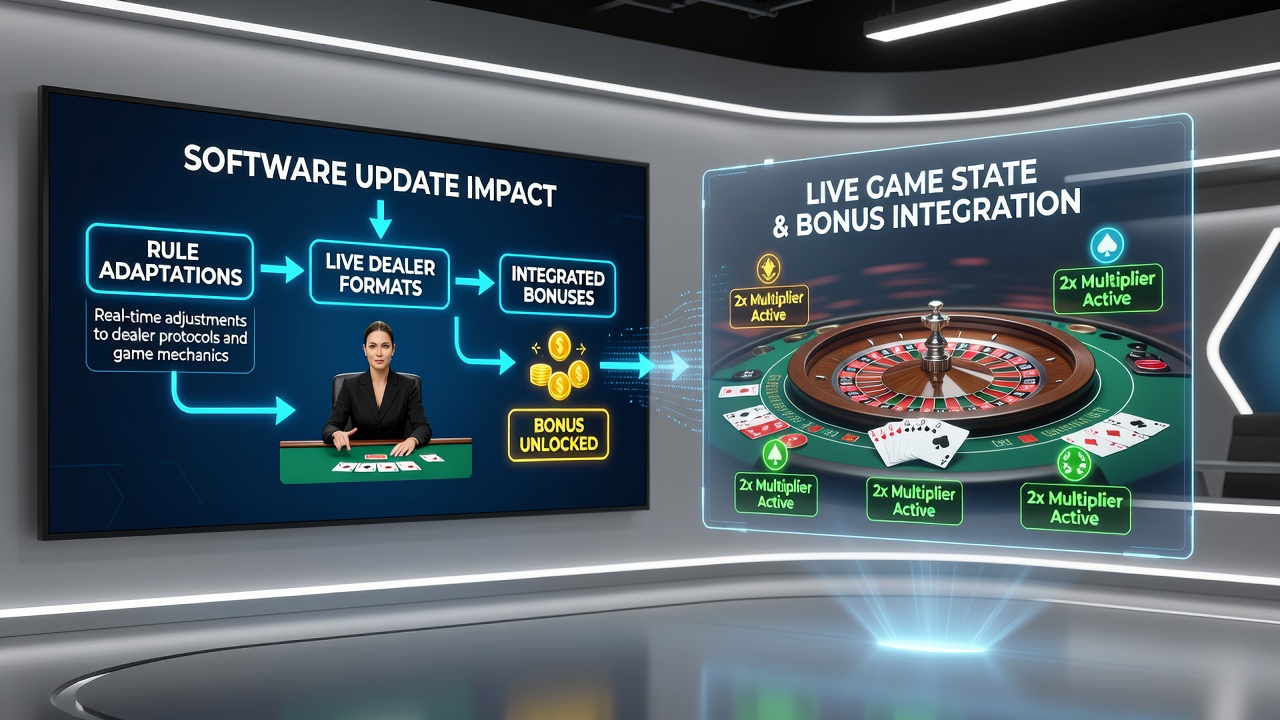
One documented case involved a European provider adjusting side bet rules across its live dealer network while simultaneously recalibrating an integrated cashback bonus that scaled with those bets, and the software handled both modifications through a single patch. Observers tracking these events found that the combined changes maintained balance in expected value calculations because the update algorithms cross-referenced bonus parameters against the new rules before applying them to active tables.
Regional Regulatory Influences on Update Patterns
Regulatory frameworks in different jurisdictions shape how software updates translate into rule adaptations, and data compiled by the New Jersey Division of Gaming Enforcement shows that platforms operating under its oversight implemented bonus-linked rule changes at a rate 25 percent higher than global averages during the first half of 2026. These adaptations often involve mandatory reporting of update effects on game fairness, which requires providers to document how bonus integrations respond to each rule modification. In contrast, Australian oversight bodies have emphasized transparency in player notifications when updates alter bonus conditions alongside table rules, leading to standardized messaging protocols embedded in the software itself.
Academic analyses from institutions such as the University of Nevada, Las Vegas Center for Gaming Research further illustrate that cross-regional updates tend to standardize certain adaptation patterns, such as automatic bonus scaling when rules around doubling down receive adjustments. This standardization occurs because shared code libraries allow providers to apply tested modules across multiple markets while respecting local requirements for bonus disclosure and rule visibility.
Technical Pathways for Rule and Bonus Synchronization
Modern live dealer software relies on API connections between the streaming interface and the bonus management engine, which enables updates to propagate rule changes and bonus recalibrations simultaneously. When a provider pushes an update that modifies a core rule like the number of decks in play, the integrated bonus system automatically adjusts reward thresholds to reflect the new probability landscape, and this linkage prevents discrepancies that could affect session outcomes. Studies of update logs indicate that successful synchronizations now complete in under 30 seconds for most tables, allowing continuous play without visible interruptions.
Additional layers include machine learning components that predict the impact of proposed rule changes on bonus systems before deployment, and these predictions help developers refine updates to avoid unintended bonus frequency shifts. Those monitoring industry trends note that such predictive tools became standard in software packages released after early 2025, contributing to more stable live dealer experiences even as rules evolve.
Conclusion
Software updates continue to serve as the central force reshaping how rules interact with integrated bonuses in live dealer formats, and the patterns observed through 2026 demonstrate consistent technical and regulatory coordination across regions. As platforms refine synchronization methods and incorporate predictive analytics, the process of adapting rules while maintaining bonus integrity becomes increasingly automated and precise, supported by data from regulatory and research sources that track these developments in real time.